Get outside
Things to do
The deepest natural pond in Missouri, the Castor River, a marsh full of waterfowl, and the home of the state dinosaur — all within the county, plus places to eat, shop, and stay.
Rivers & Conservation Areas
Missouri’s deepest natural pond, the Castor River, and miles of trails and marsh.
Castor River Conservation Area
Almost 10,000 acres of Missouri Department of Conservation forest along the Castor River, on both sides of Highway 34 west of Marble Hill. Multi-use trails are open to hiking, biking, and horseback riding; there’s primitive camping, including designated sites and walk-in or float-in camping; and the streams hold sunfish, catfish, and black bass. Hunters come for deer, turkey, squirrel, and dove, and an unstaffed rifle and handgun range takes paper targets only. Blue Pond, the deepest natural pond in Missouri, is inside the area. Open daily 4 a.m. to 10 p.m.; Route Y south from Highway 34 leads to the campgrounds, trails, and range.
Blue Pond Natural Area
The deepest natural pond in Missouri: a small, clear pond more than 65 feet deep, tucked into the Castor River Conservation Area. It’s thought to have formed when a cavern collapsed during the New Madrid earthquakes of 1811. The surrounding natural area protects the pond and the forest around it; bird watchers look for pileated woodpeckers and wood thrushes. From Marble Hill, take Highway 34 west and turn south on Route Y.
Duck Creek Conservation Area
About 6,300 acres of marsh, bottomland forest, and flooded timber where Bollinger, Stoddard, and Wayne counties meet, beside the Mingo National Wildlife Refuge. The state bought the land in 1950 for waterfowl hunting, and the 1,800-acre Pool 1 feeds the marshes and greentree reservoirs. Duck hunting runs on a morning draw; the rest of the year it’s a place for fishing (crappie, catfish, sunfish, and bass), birding, and camping at designated sites. There’s also an unstaffed shooting range and an archery range. Open daily 4 a.m. to 10 p.m.
Greenbrier Unit of Duck Creek Conservation Area
A 474-acre unit of Duck Creek Conservation Area in the southeastern corner of Bollinger County, along the Castor River, with a concrete boat ramp onto the river. From Advance, take Route C west about 7 miles.
Historic Sites & Dinosaurs
Missouri’s state dinosaur, an 1885 courthouse, and the old railroad town of Lutesville.
Elvis the Allosaurus
A nearly life-size Allosaurus that stands beside Highway 34 at Marble Hill, the last piece of the Bollinger County Museum of Natural History to find a new home after the museum closed in 2022. It’s there to remind travelers that this is Missouri’s dinosaur county: in 1942 the Chronister family, digging a well near Glen Allen, turned up the first dinosaur bones ever found in the state. They belonged to Hypsibema missouriensis, a duck-billed dinosaur that became Missouri’s state dinosaur in 2004, and digs near Glen Allen have turned up more since.
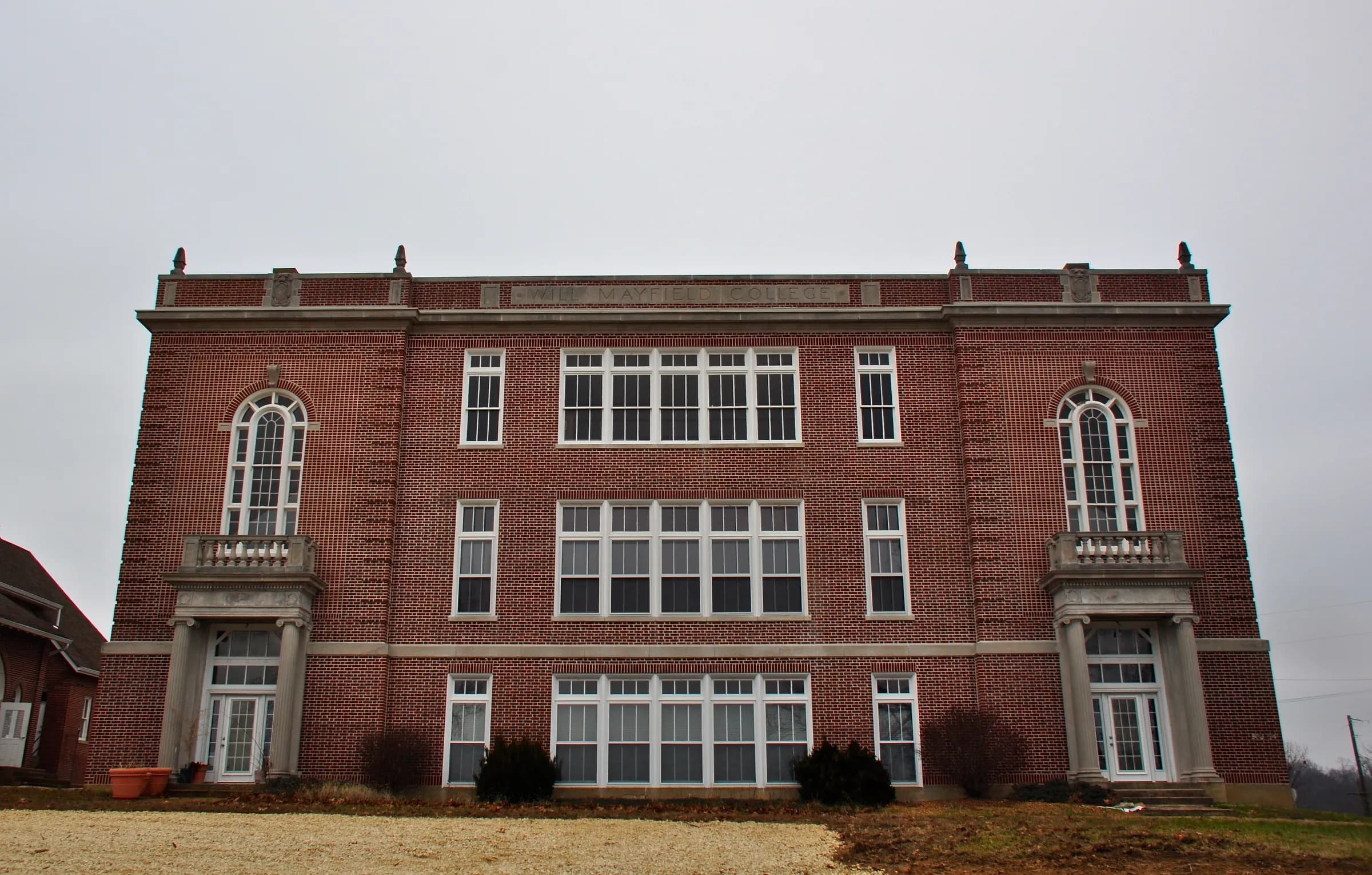
Will Mayfield College and the Bollinger County Library
Will Mayfield College moved to Marble Hill in 1880 and taught students here until 1934; enrollment peaked at more than 200 in the 1920s. Its Classical Revival Arts and Science Building (1924–27) was listed on the National Register of Historic Places in 2005, and the campus as a whole in 2013. The Bollinger County Library is on the old campus today, and the closed natural history museum’s baby dinosaurs now live in its children’s section.
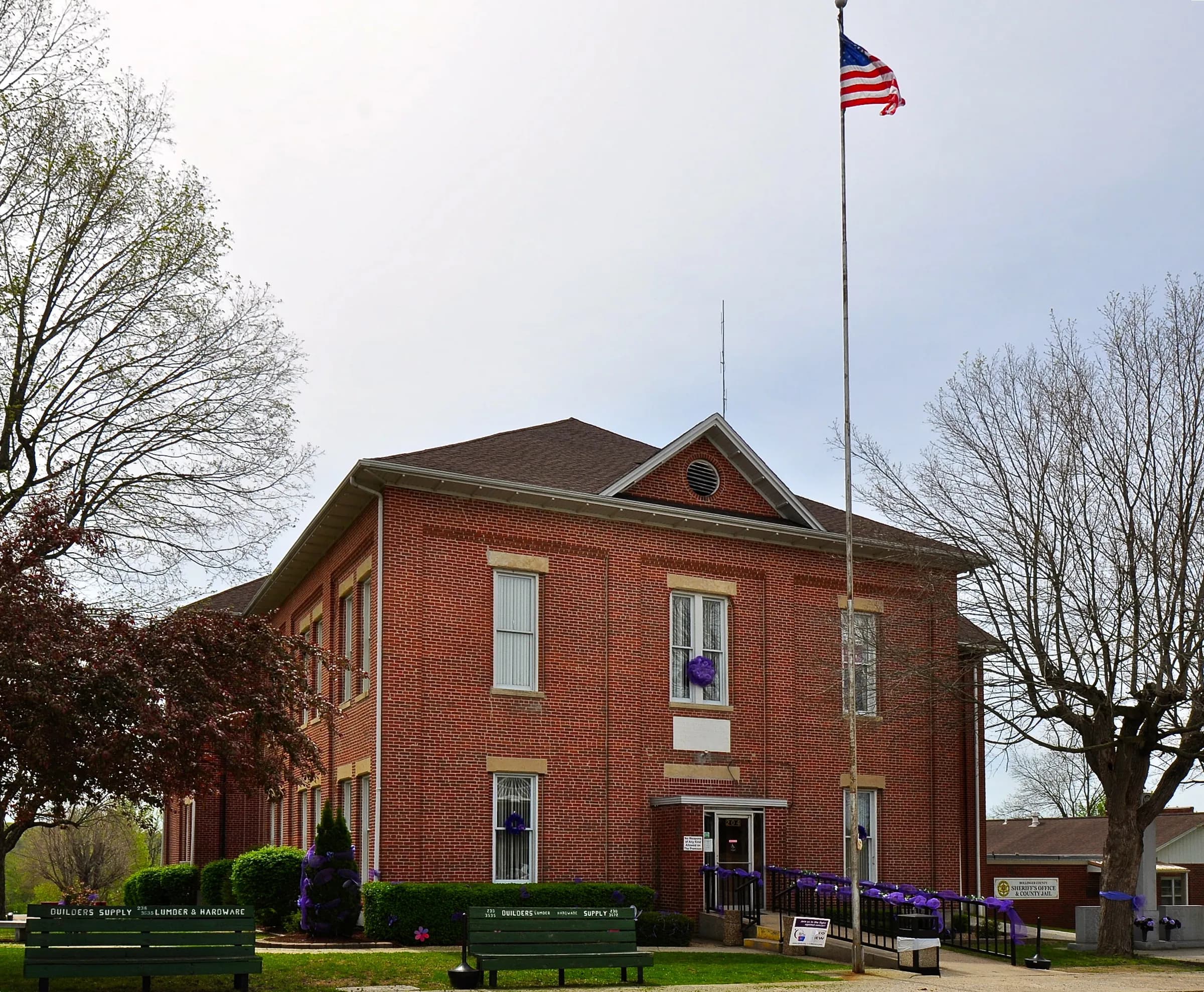
Bollinger County Courthouse
The county’s third courthouse, finished in 1885 to a design by Morris Frederick Bell for $9,000. Its two predecessors both burned: a converted brick building north of the square in March 1866, and its replacement, declared unsafe and abandoned, in March 1884. Additions came in 1912 and restoration work in the 1960s and 1970s, and the building is still the seat of county government.
Old Lutesville and 1st Street
Eli Lutes laid out Lutesville in 1869 on land he gave the St. Louis and Iron Mountain Railroad for a depot, and it grew into the county’s busiest town, with a newspaper, a hotel, and carriage and stove factories by the 1870s. Lutesville and Marble Hill merged in 1985 under the county seat’s name. Its old main street, 1st Street, now has antique and gift shops and E. C. Reed’s Mercantile & Hotel.
St. John’s Catholic Church, Leopold
Father John van Luytelaar and twelve Catholic families, German and Dutch, settled here in 1856, when the nearest church was in Cape Girardeau. They began a log church that year and a frame church in 1858. The town’s name came later: asked to name the new post office, the parish proposed Leopolis, for Pope Leo XIII; postal officials turned it down and accepted Leopold. The parish is still active.

Food & Drink
Places to eat and drink
Shopping
Antiques, boutiques, and local shops
Recreation
Outfitters, rentals, and more to do
Camping & Lodging
Places to stay
Gas & Convenience
Gas and supplies
Add a place
Suggest a business
Know a restaurant, shop, outfitter, or place to stay that belongs here? Tell us about it and we’ll take a look.
Verify before relying on this. Compiled from the Missouri Department of Conservation, the National Register of Historic Places, Historic Missouri, and each venue’s own site. Hours, fees, and regulations change — check directly before a trip, especially for hunting and fishing seasons and limits.